Breast cancer is something that touches almost every Australian family in some way. In fact, 58 Australians are diagnosed with breast cancer every single day — a number that can feel overwhelming, but also one that underscores just how important awareness and early detection truly are. The encouraging reality is that survival rates have improved dramatically over recent decades, largely because more people are detecting breast cancer earlier, when it is most treatable. Understanding your screening options — and actually using them — is one of the most meaningful steps you can take for your long-term health.
What is breast cancer screening?
Breast cancer screening refers to checking for signs of breast cancer before any symptoms appear. The goal is to find changes in breast tissue at the earliest possible stage, ideally before a lump is even detectable by touch. The main tool used for screening is a mammogram — an X-ray of the breast taken from multiple angles. Mammograms can detect tumours and other changes that are too small to feel, which is why they are so valuable even when you feel perfectly well.
It is worth noting that screening is different from diagnostic testing. If you have already noticed a change in your breast — such as a new lump, skin dimpling, nipple discharge, or persistent pain — that requires a prompt conversation with your GP rather than waiting for a routine screening appointment. Screening is for people without any current symptoms.
When should you start screening, and how often?
In Australia, the National Breast Cancer Screening Program (BreastScreen Australia) recommends that women aged 50 to 74 have a mammogram every two years. This age group is considered to have the highest risk relative to the benefits of screening, and two-yearly mammograms are currently supported by the strongest evidence for this population.
Women aged 40 to 49 and 75 and over are also eligible to access BreastScreen Australia free of charge, though the program does not actively send invitations to these age groups. If you fall outside the 50–74 bracket and are wondering whether screening is right for you, your GP is the best person to help you weigh up the benefits and your individual circumstances.
BreastScreen Australia offers free mammograms to women aged 40 and over with no GP referral required. You can self-refer by calling 13 20 50 or visiting the BreastScreen NSW website to book an appointment at your nearest clinic.
For women with a higher-than-average risk of breast cancer — for example, those with a strong family history, a known gene mutation such as BRCA1 or BRCA2, or a history of certain benign breast conditions — different screening recommendations may apply. This might include starting mammograms at a younger age, screening more frequently, or adding other imaging such as MRI. Your GP can help assess your personal risk level and guide you towards the most appropriate plan.
Understanding breast awareness
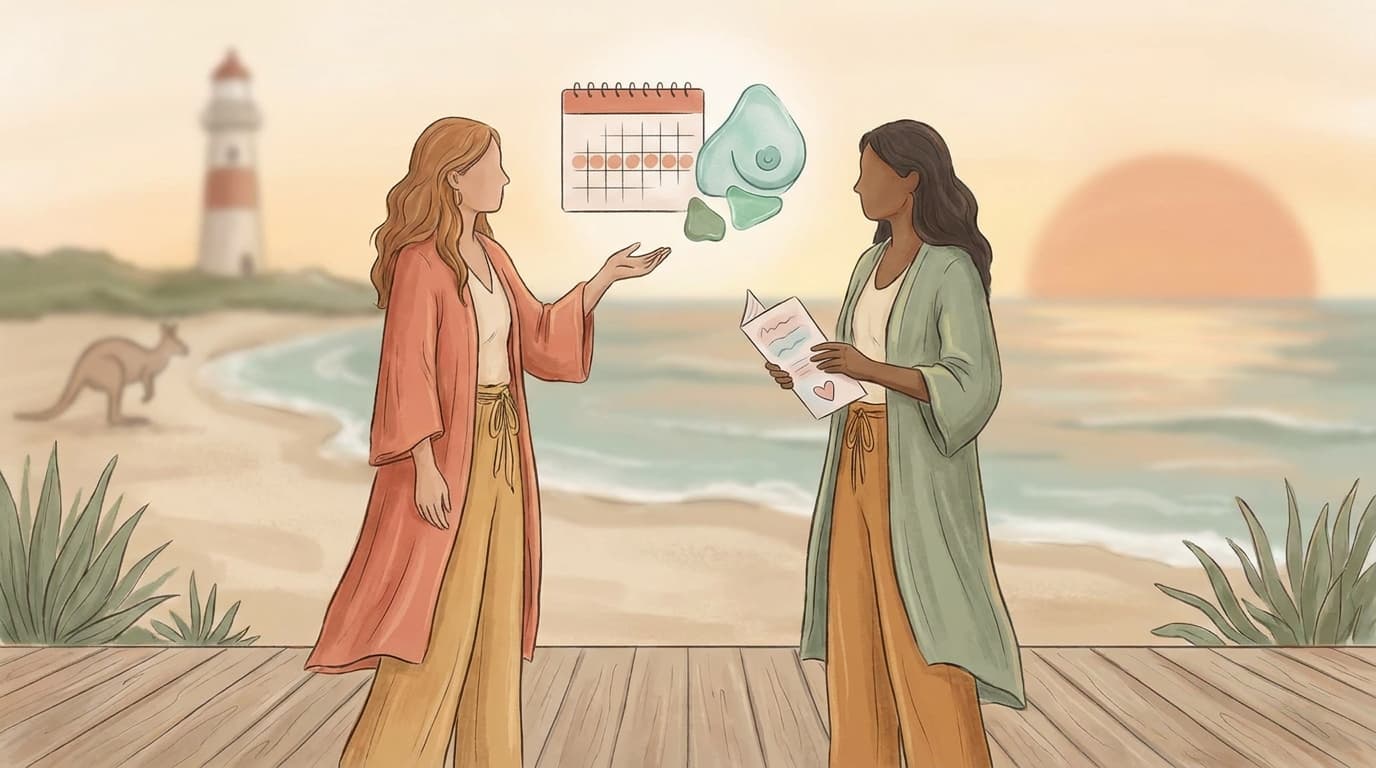
Alongside formal screening, being familiar with your own breasts — what is normal for you — is an important part of breast health at any age. Breast awareness simply means knowing how your breasts normally look and feel, so that you can notice if something changes. There is no single "correct" way to check your breasts, and you do not need to follow a rigid routine to be breast aware. The aim is simply to be familiar enough with your body that changes stand out.
It is also worth remembering that breasts can naturally change throughout the month in response to your menstrual cycle, as well as during pregnancy, breastfeeding, and menopause. What you are looking and feeling for are changes that are new or unusual for you specifically.
See your GP promptly if you notice any of the following:
- A new lump or thickening in the breast or underarm area
- Changes to the shape, size, or contour of a breast
- Skin changes such as dimpling, puckering, redness, or a rash
- A nipple that has turned inward or changed position
- Nipple discharge, particularly if it is bloodstained
- Persistent, unexplained pain in one area of the breast
Most breast changes turn out not to be cancer, but any new or unusual change deserves prompt professional attention. It is always better to have something checked and be reassured than to wait and wonder.
Supporting breast cancer research this October
October is Breast Cancer Awareness Month, and the National Breast Cancer Foundation (NBCF) is calling on Australians to come together for their Pink Ribbon Breakfast campaign. The NBCF is Australia's leading community-funded organisation dedicated to breast cancer research, and every dollar raised goes directly towards funding the research that improves outcomes for the tens of thousands of Australians diagnosed each year.
Whether you host a breakfast at your workplace, get your family together at home, or donate to support someone else's event, participating is a simple and meaningful way to make a difference. You can find out more and get involved at the official NBCF Pink Ribbon Breakfast page: https://fundraise.nbcf.org.au/event/pink-ribbon-breakfast/home
Did you know? The five-year survival rate for breast cancer in Australia is now around 92% — a testament to the power of early detection and decades of dedicated research. Screening saves lives.
Making screening a priority
It is easy for health checks to slide down the to-do list when life gets busy, or to put off a mammogram because you feel well and are not worried. But breast cancer screening is one of those things that works precisely when nothing seems wrong. The whole point is to look before symptoms appear.
Here are a few simple steps you can take right now:
- Check when you last had a mammogram — if it has been more than two years and you are aged 50–74, it is time to rebook
- If you are aged 40–49 or over 75, speak with your GP about whether routine screening is right for you
- Take a moment to become familiar with how your breasts normally look and feel
- Talk to your GP if you have a family history of breast or ovarian cancer, so your personal risk can be properly assessed
- If you notice any new or unusual breast change, make an appointment with your GP — do not wait
At Cronulla Medical Practice, we are here to support you through every stage of your health journey — including helping you understand your screening options and making sure you have access to the care that is right for you. Breast cancer screening is not something to navigate alone, and a conversation with your GP is always a good place to start.
Ready to talk about your breast health? Book an appointment with one of our GPs at Cronulla Medical Practice. We are here to answer your questions, review your screening history, and help you feel confident about the steps you are taking for your health.